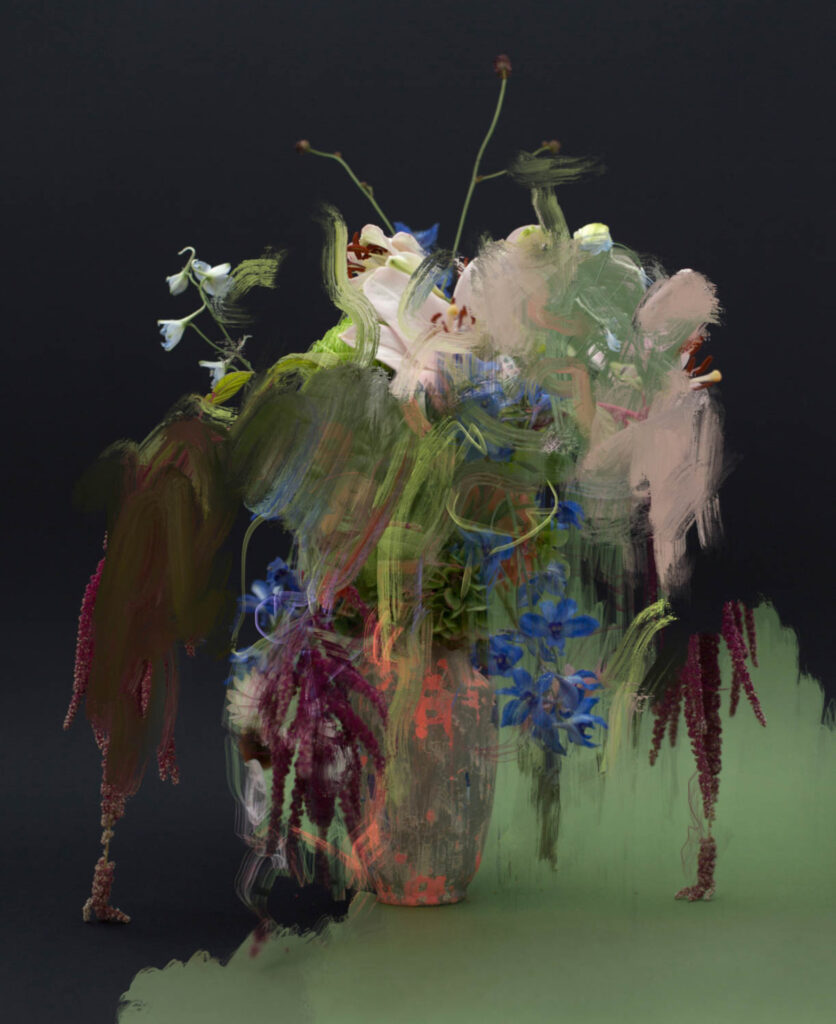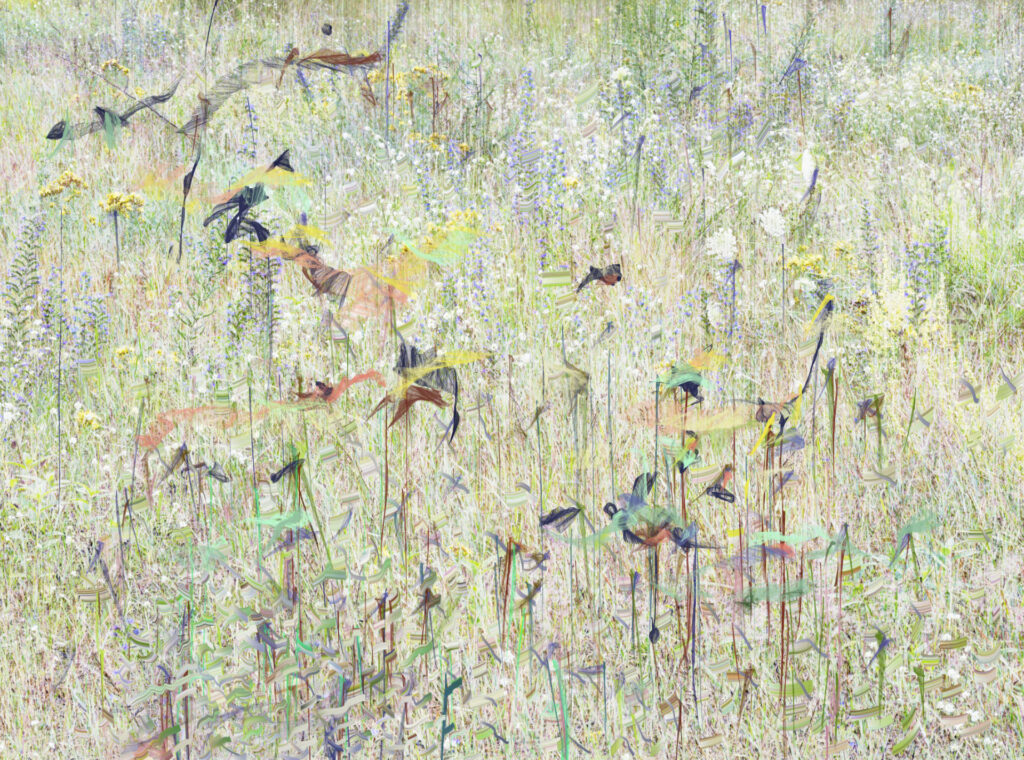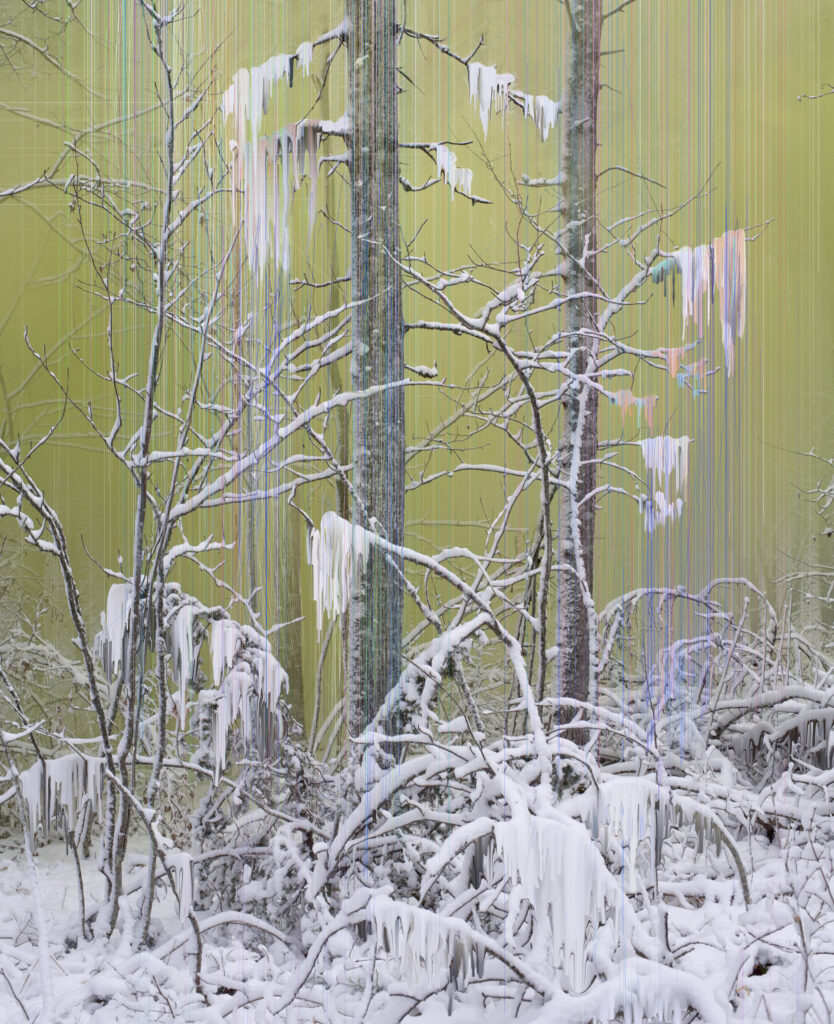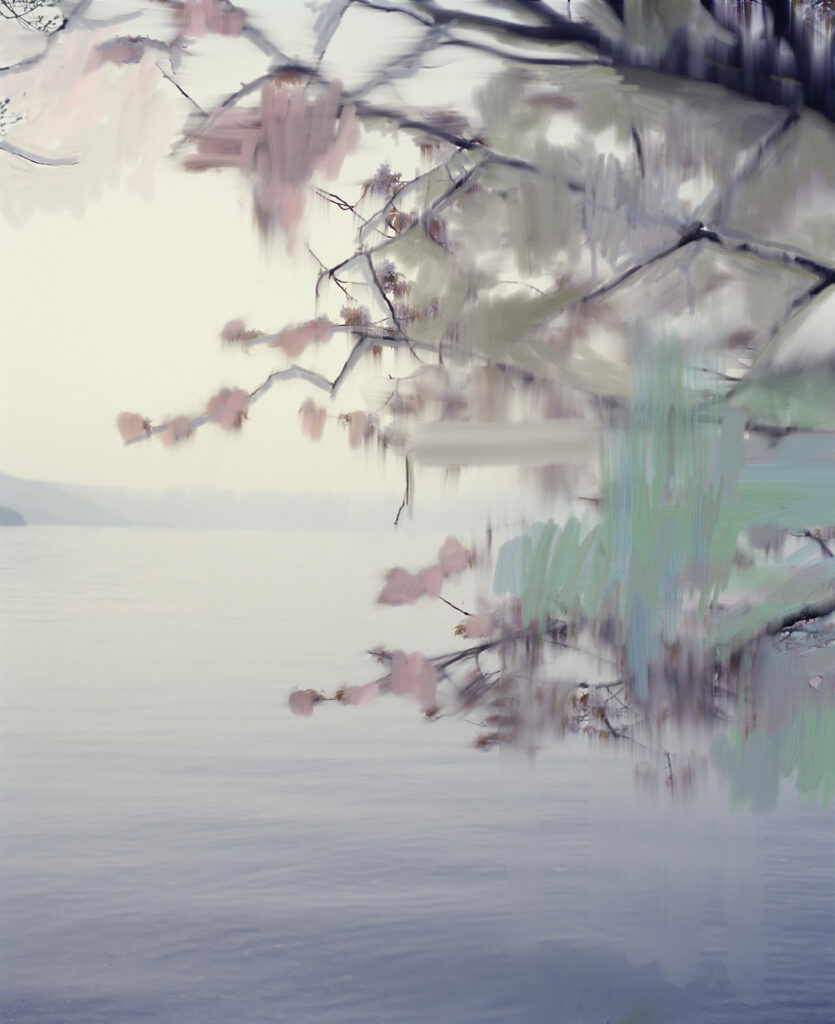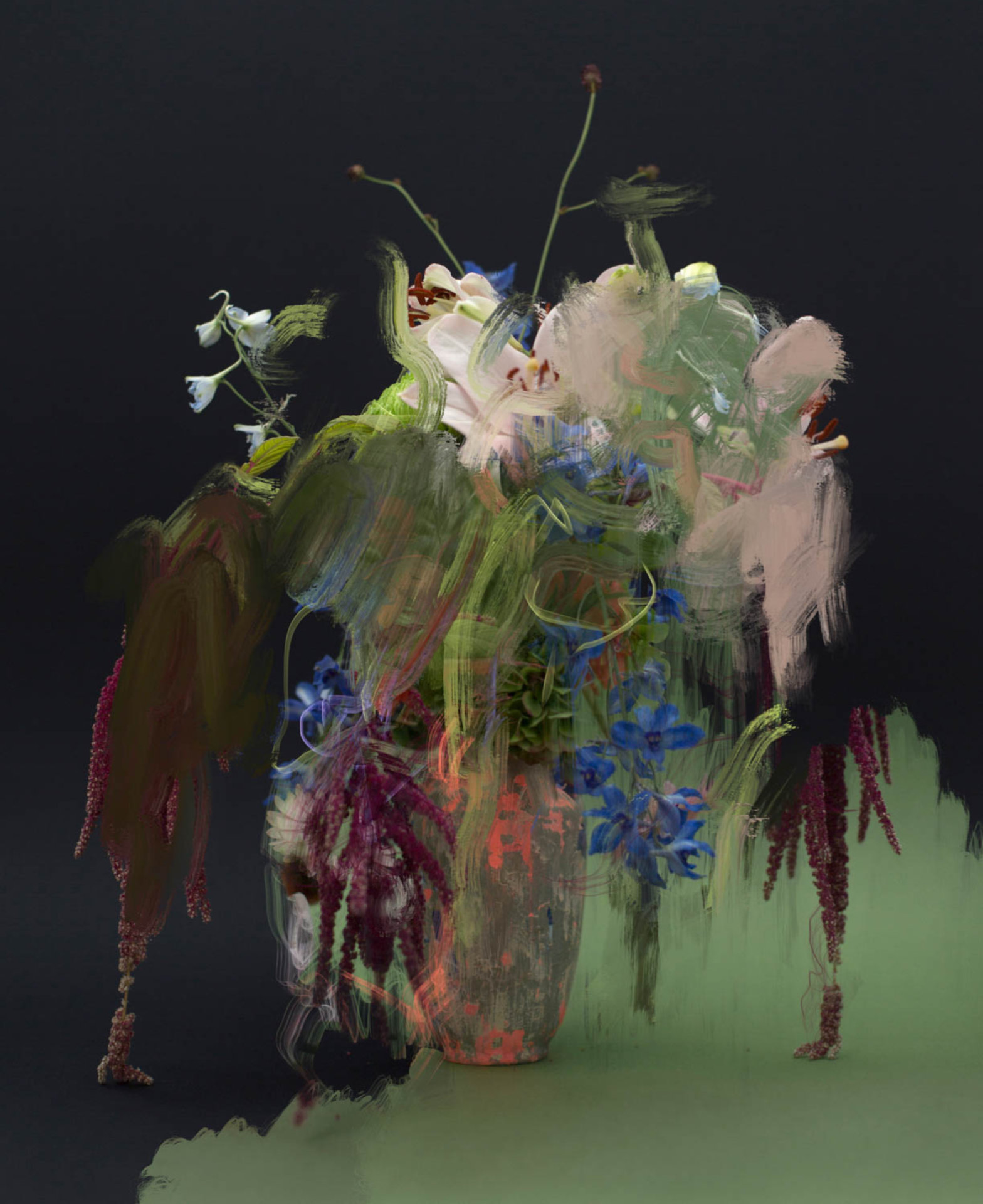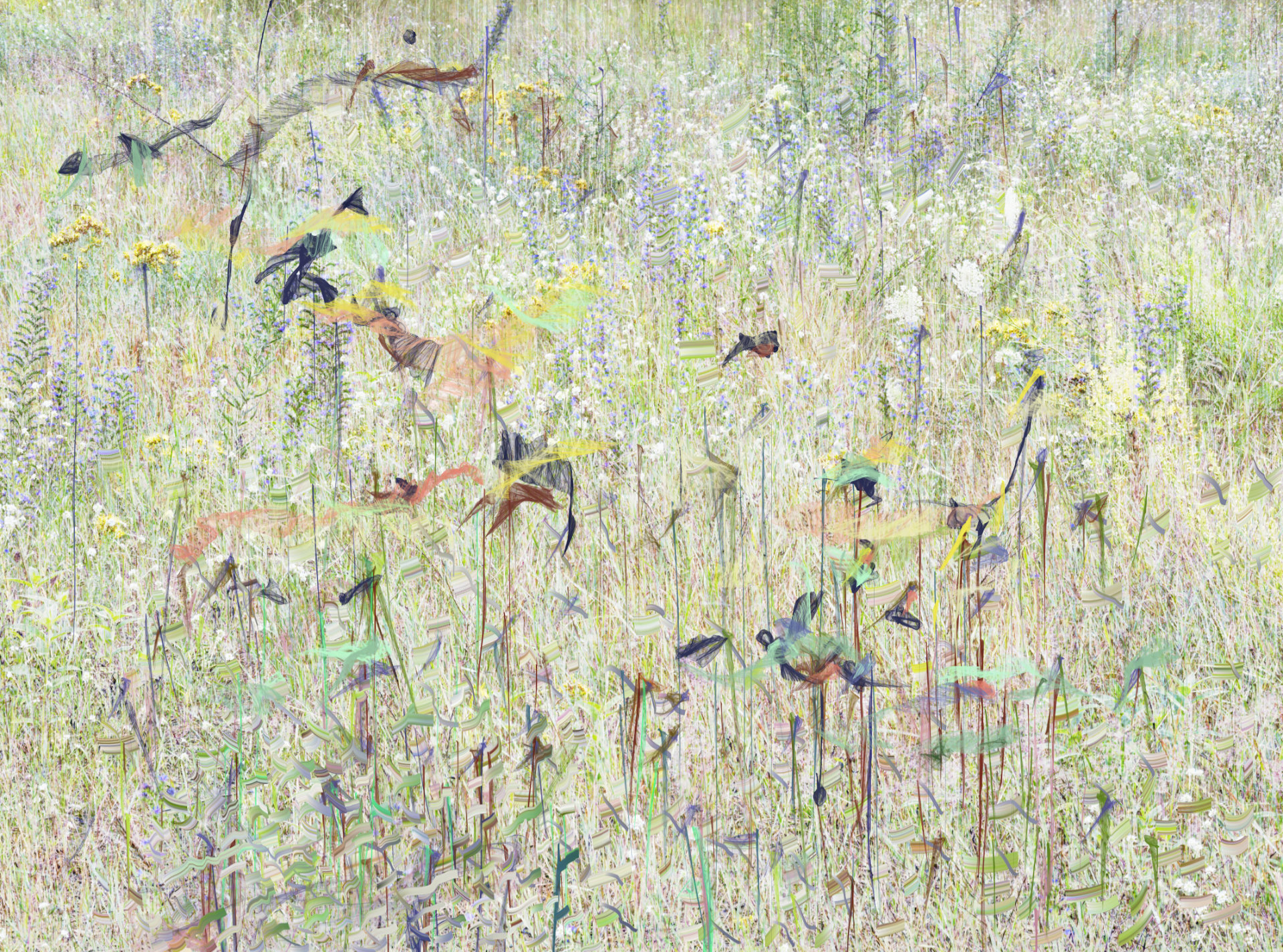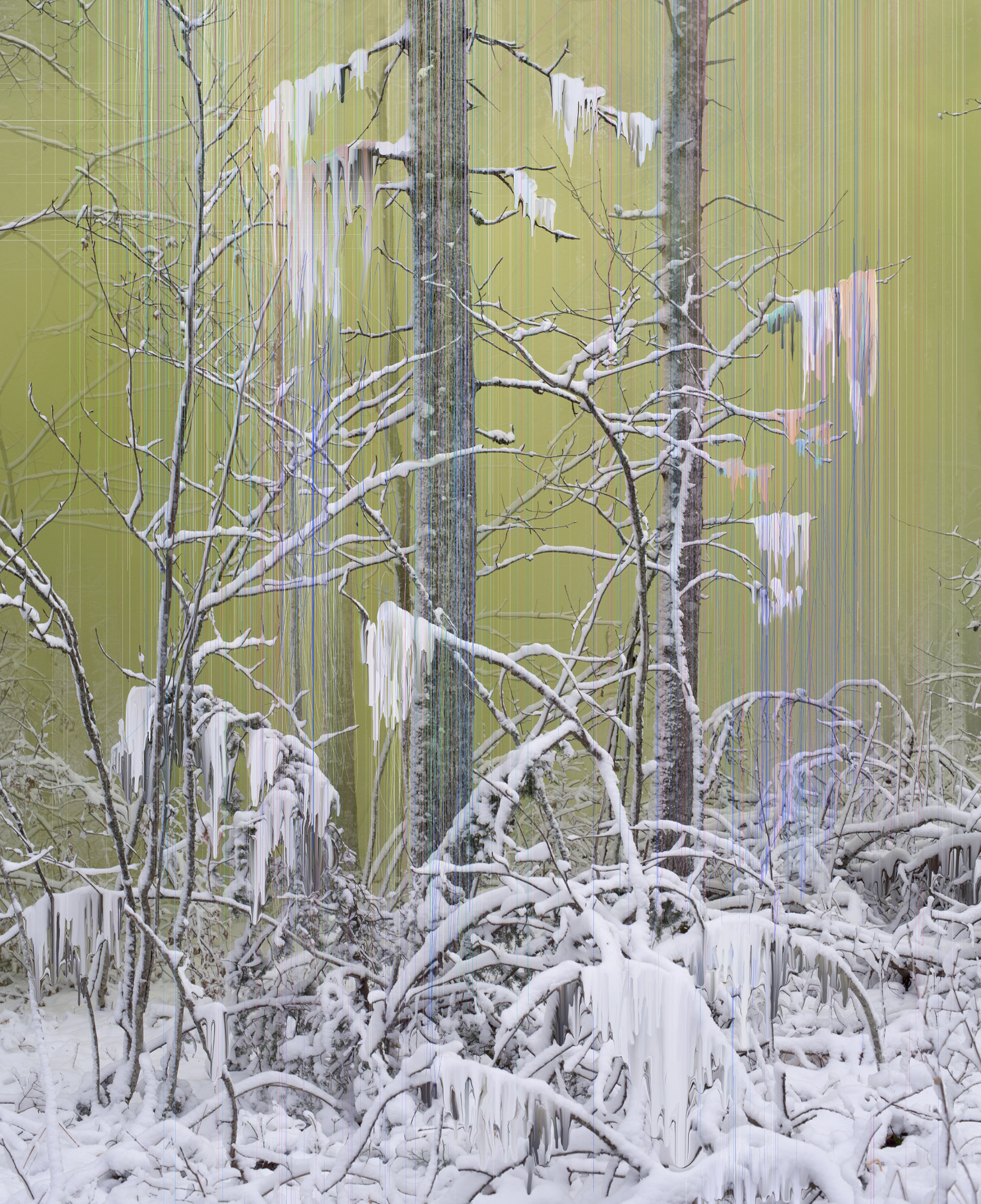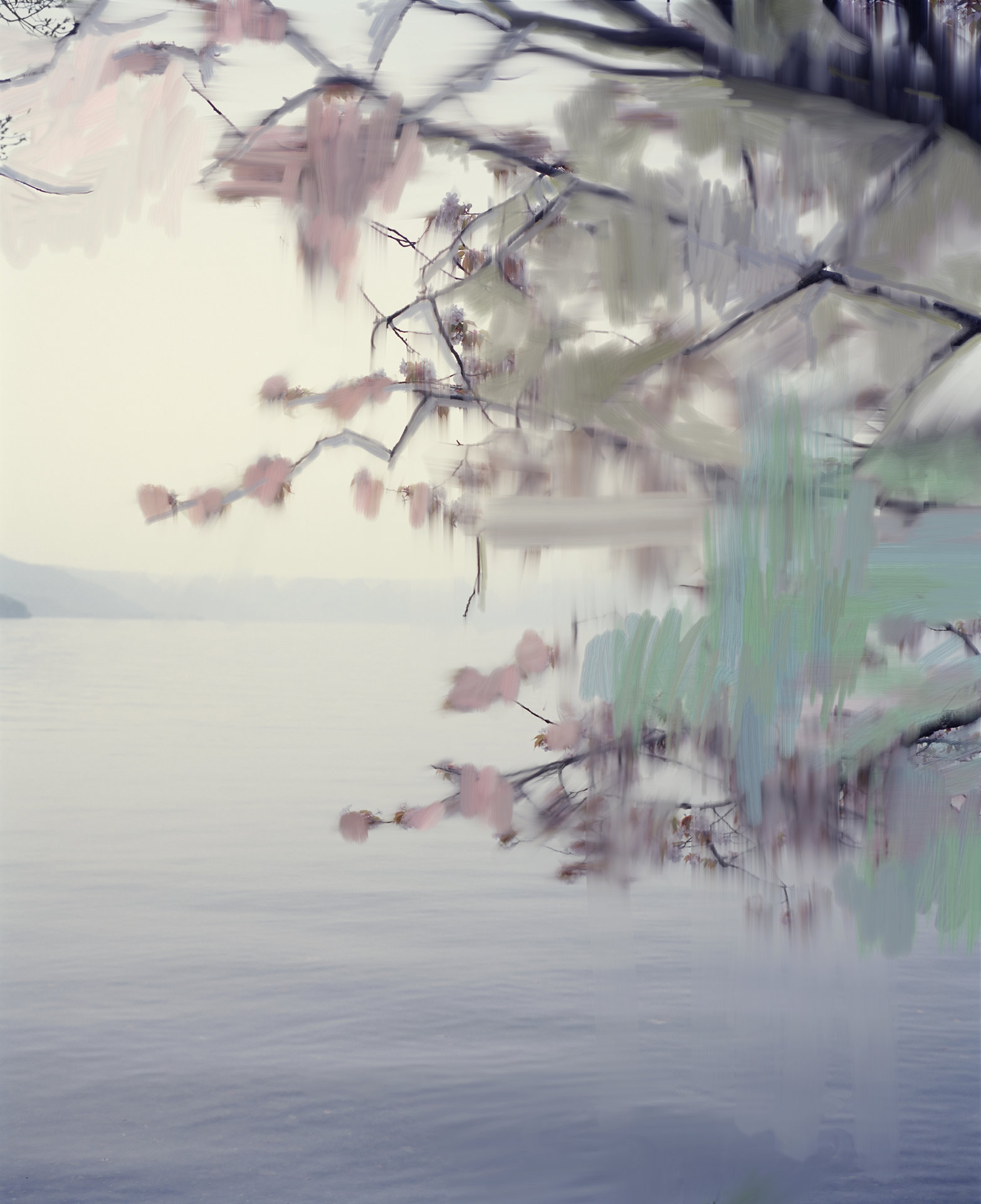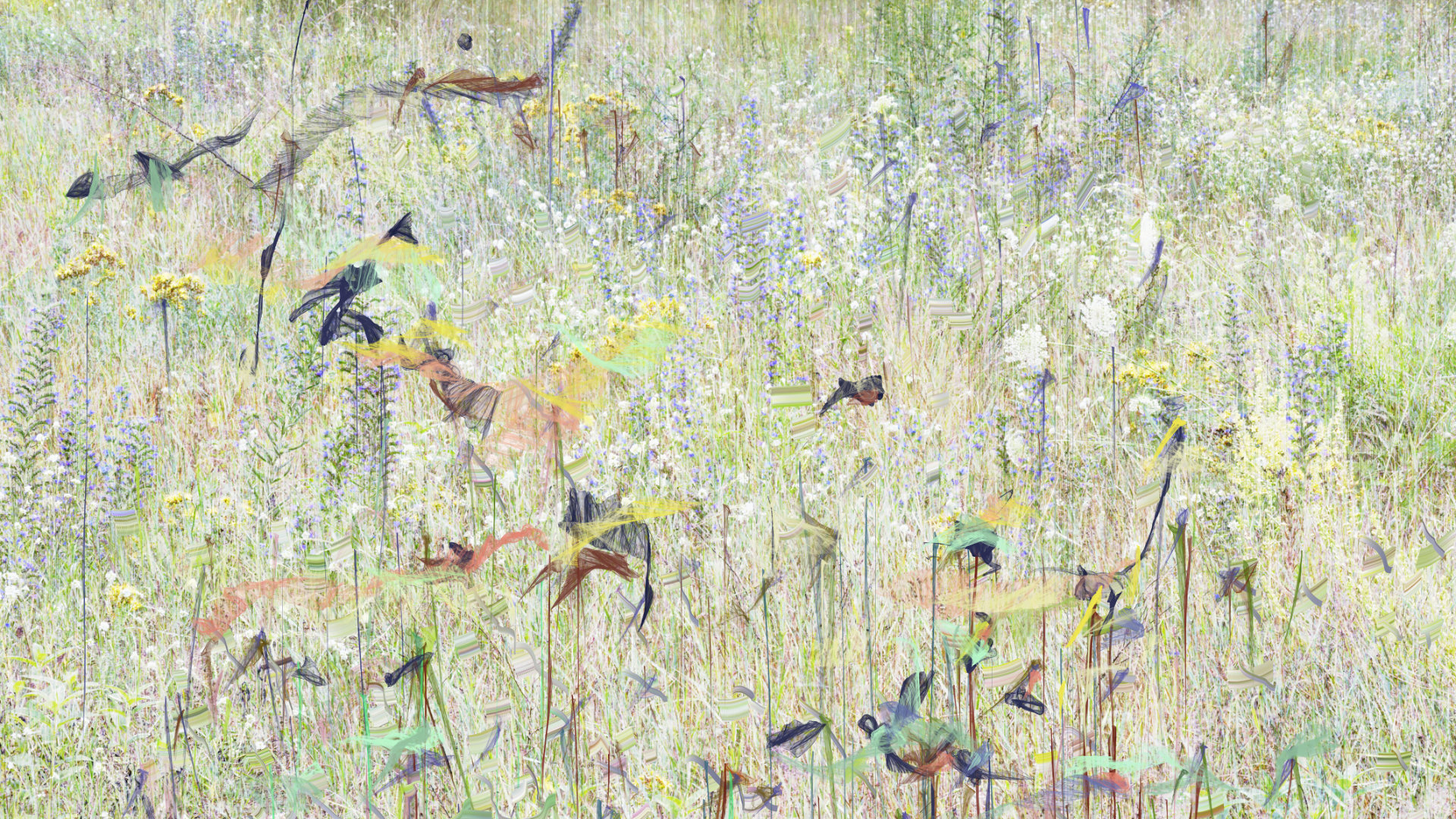
Sandra Kantanen is one of the best-known photographers of the Helsinki School, and her award-winning works are most often seen outside of Finland. At the core of her practice are fundamental questions of photography and landscape, the interface between the real and the ideal, and nature in a state of constant transformation. Recurring themes in her work include fragility, transience, and the presence of memory within the landscape. Nature appears both as an external and an internal space, where humans and their environment reflect one another. The ephemerality is essential—the shifting of light and color that renders the landscape an image in perpetual motion.
Kantanen developed her distinctive technique, which combines photography and the language of painting, in the early 2000s. This synthesis did not signify merely the fusion of two media, but also the convergence of two visual cultures. Kantanen became acquainted with Chinese landscape painting while studying in Beijing, and her visual thinking draws on Asian landscape traditions and Eastern philosophy. At the same time, her practice operates strongly on a meta-level of photography, engaging with Western art theory and art history.
Through her technique, Kantanen challenges the distinction between photography and painting and emphasizes the active role of the photographer in the creation of the artwork. The staging of shooting locations, layered imagery, and digitally manipulated pixels reminiscent of dripping paint underscore the constructed nature of both image and landscape. The painterly trace transformed into digital distortion seems to function as a kind of disturbance, interrupting our act of looking and our pursuit of an elusive ideal. In many of her series, Kantanen explores photography’s relationship to time and materiality. In the series Smokeworks (2016–2021), the colored haze of smoke bombs fills the forest like a dreamlike memory; in the series Distortions (2016–), the movement of plants scanned with a flatbed scanner makes the long exposure time visible. Elsewhere, the silence and calmness of the landscapes almost bring time to a standstill. In the expansive Meadows (2023–), we can perceive the entire cycle of life—the shared history of humanity and nature. The landscape opens into a meditation on what it means to be in a place, to be present in the world, and to perceive the continuity of time.
Kantanen’s first major museum exhibition brings together works from the early 2000s to the present day. In addition to works from the artist’s own collection, the exhibition includes loans from public and private collections. Produced by the Turku Art Museum, the exhibition is curated by Elli Liippo and Annina Sirén.
The artist’s work has been supported by the Swedish Cultural Foundation in Finland and the Arts Promotion Centre Finland. The exhibition is supported by the Finnish Heritage Agency.
Thanks: Persons Projects, Purdy Hicks Gallery
Sandra Kantanen (b. 1974, Helsinki) lives and works in Hanko. She graduated as a photographer from the University of Art and Design Helsinki (now Aalto University) in 2003 and studied at the Central Academy of Fine Arts (CAFA) in Beijing in 2001. Kantanen’s works are part of many significant collections, including the J. Paul Getty Museum and LACMA in Los Angeles, as well as the Brooklyn Museum in New York. Her work has been exhibited at venues such as the SAATCHI Gallery in London, the Houston Center for Photography, the Denver Art Museum, and the Museum of Contemporary Art Kiasma and HAM Helsinki Art Museum. Kantanen has published two monographs, Landscapes (2009) and More Landscapes (2019), with the German publisher Hatje Cantz.