

Published 18.9.2026
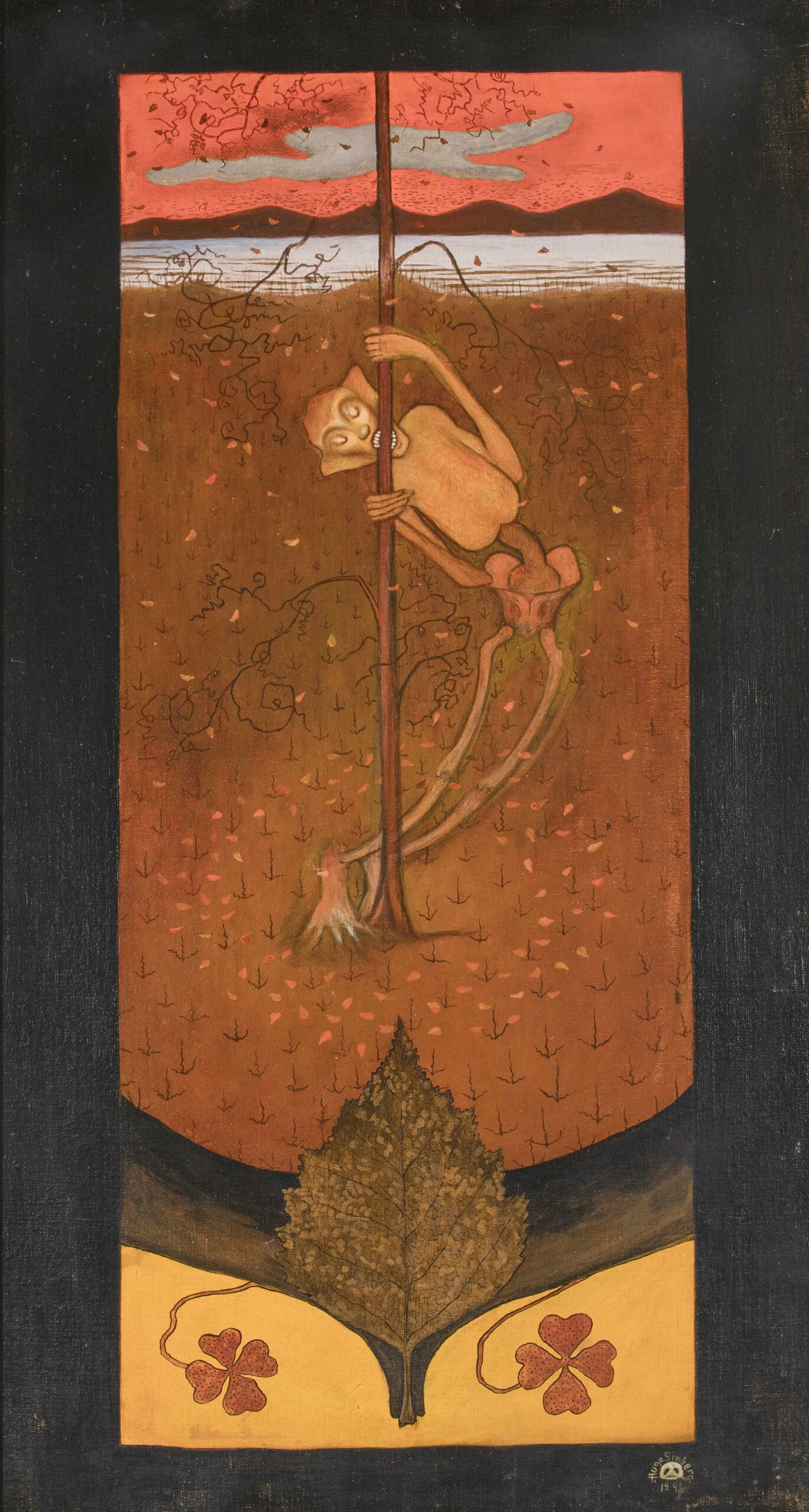
Hugo Simberg: Beyond the Visible
Turku Art Museum 2 October 2026 –17 January 2027
Press preview on Thursday, 1 October 2026 at 11 am Turku Art Museum (Aurakatu 26)
Opening on Thursday, 1 October 2026 at 5–7 pm
The exhibition will be inaugurated byart historian Marjatta Levanto
Hugo Simberg’s (1873–1917) multifaceted works take centre stage at Turku Art Museum in an extensive exhibition spanning the artist’s entire career. Bringing together more than 70 works, the exhibition portrays Simberg as an artist whose work moves effortlessly between everyday life and fantasy, humour and gravity, and life and death. Simberg never explained his works himself, and more than a century after they were created, their enigmatic quality continues to resonate, leaving room for new interpretations.
Simberg had an exceptional ability to observe the world and to find meaning in the ordinary, in his own experiences and in his immediate surroundings. His home region in eastern Finland, the family’s summer residence at Niemenlautta, and later, urban life in Helsinki provided subjects and atmospheres that he repeatedly reworked in his art. A decisive turning point came when he worked as a pupil of Akseli Gallen-Kallela in Ruovesi, where the wilderness, its people and peasant culture left their mark on his Symbolist imagery. Through Gallen-Kallela, Simberg was also introduced to new European artistic movements and inspired to embark on his first journeys abroad.
Simberg’s Symbolist works reach beyond visible reality, drawing on folklore, the mysticism of nature and inner visions. An enigmatic quality is present throughout the artist’s oeuvre, while his style varies from naïve and decorative to realistic and, ultimately, colourism. Simberg portrayed his subjects with depth and empathy, focusing on the inner essence of his models and stripping away anything superfluous. In his imaginative works, devils and skeletons appear as human and sympathetic figures, while death is portrayed as an inevitable yet gentle visitor. The fairytale-like imagery elicited mixed reactions in Simberg’s own time. Contemporary critics sometimes dismissed the works as childish, while his technically accomplished and atmospheric portraits received wider acclaim. Since then, it is precisely the devils, angels and skeletons that have become among the most beloved motifs in Simberg’s art.
The exhibition contextualises Simberg’s artistic practice, the processes behind the creation of his works and his art historical influences, while exploring possible layers of meaning in light of the latest research. Simberg emerges as a curious and skilled experimenter, trying different techniques and being among the first in the Finnish art scene to master the methods of printmaking, for instance. He developed and varied his key motifs repeatedly, exploring them through different techniques and in multiple versions.
Produced by Turku Art Museum and curated by Selina Kiiskinen, the exhibition brings together works from private collections and several public collections (Emil Aaltonen Art Collection/Tampere Art Society, Gösta Serlachius Art Collection, HAM Helsinki Art Museum, Hämeenlinna Art Museum, the Finnish National Gallery/Ateneum Art Museum, Ostrobothnian Museum, Reitz Foundation, the National Museum of Finland, Turku Art Museum, and Vaasa Finnish Parish). Alongside tempera, oil and watercolour paintings, the exhibition features colour and black-and-white etchings and woodcuts. The exhibition offers an opportunity to explore not only Simberg’s best-known motifs but also his artistic practice and his continuous experimentation with different forms of expression.
Additional information
curator Selina Kiiskinen
+358 40 6323 375/ selina.kiiskinen@turuntaidemuseo.fi
turuntaidemuseo.fi